EN
EN

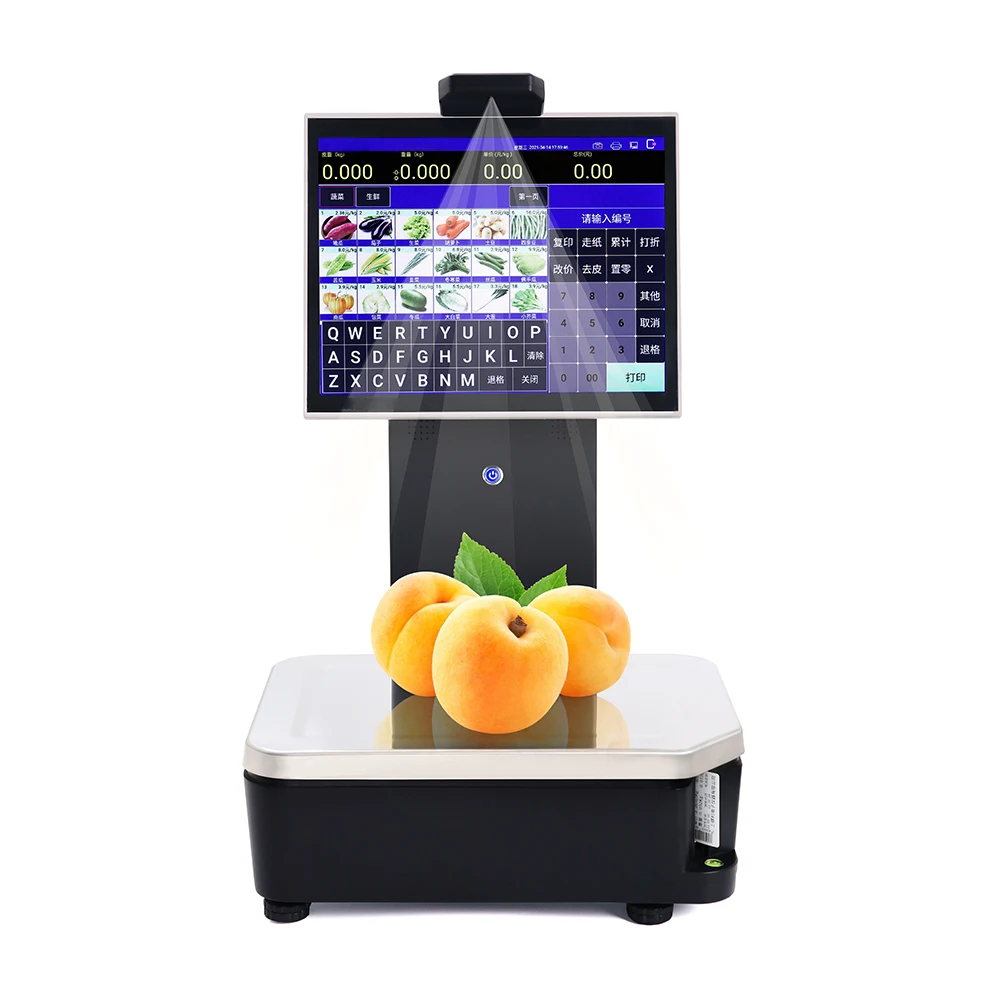
Retail scales powered by artificial intelligence are changing how stores keep track of their stock. Instead of counting items manually, these smart scales work behind the scenes, keeping tabs on weight changes and matching those numbers against what's already in the inventory system. The technology relies on Internet of Things sensors to spot when products move around the store and then updates inventory records everywhere at once. A recent study from the Logistics Efficiency Report shows something pretty impressive too. Stores that switched to these intelligent weighing systems saw about half as many mistakes during inventory checks compared to old fashioned counting methods. That's a drop of nearly 50 percent in errors alone.
Modern scales with embedded AI processors analyze sales patterns while weighing products, enabling retailers to:
This real-time insight allows proactive decision-making without relying on delayed reporting or manual audits.
AI-enabled scales feed precise, continuous data into machine learning models, improving restocking predictions by up to 72 hours over manual forecasts. This integration helps retailers:
By syncing physical inventory with predictive analytics, retailers minimize both stockouts and overstocking.
One regional grocery company rolled out AI-powered scales at 18 of its locations and connected these systems to their existing supply chain via APIs. When looking at live sales data next to what was actually on the shelves, the AI platform could generate restocking requests almost three hours quicker than when staff did it manually. During the third quarter of last year, this led to a significant drop in empty shelves - down around 32% from previous levels. At the same time, there was also about a 19% reduction in wasted food products. These results show just how much difference automated systems can make for keeping products available while also being better for the environment.
Scales powered by artificial intelligence make things run smoother for businesses because they handle all sorts of repetitive work such as checking weights and calculating prices automatically. According to some research published last year, retail outlets that implemented these smart scale systems saw their checkout process speed up by around 19 percent without sacrificing much on accuracy either — the error rate stayed at just 0.2%. When clerks don't need to manually input basic information anymore, they actually get time to talk to customers face-to-face. And guess what? Stores reported seeing roughly 23% more sales when staff members could spend quality time helping shoppers pick out products rather than being stuck behind counters entering numbers into registers all day long.
Smart weighing systems address the “checkout bottleneck” by significantly speeding up non-standard item processing:
| Manual Scales | AI-Enabled Scales |
|---|---|
| 8-12 sec/item | 2-4 sec/item |
| 3-5% error rate | 0.2% error rate |
| Fixed pricing logic | Dynamic margin optimization |
AI scales process items four times faster and reduce weighing-related disputes by 83% (Ponemon 2023), enhancing both throughput and customer satisfaction.
Contrary to common assumptions, 72% of retailers implementing AI scales expanded their workforce by redeploying employees to higher-value roles. Stores maintain 94% baseline staffing while handling 41% more transactions through optimized scheduling and task allocation, according to a supply chain analysis. Automation supports labor efficiency without compromising employment levels.
Early adopters report a 17% increase in employee retention after deploying AI scales (BP3 2023). By removing repetitive, error-prone tasks, workers achieve 28% higher productivity in customer engagement metrics. This synergy between human teams and AI tools demonstrates that automation enhances—not replaces—the retail workforce.
AI-enabled scales prevent self-checkout fraud by instantly verifying product weight against database records. When discrepancies exceed 8%—such as labeling cherries ($9.99/lb) as bananas ($0.69/lb)—the system flags potential mislabeling. Pilot programs at midwestern grocery chains saw a 67% reduction in such fraud, based on findings from a 2024 retail security study.
Traditional scales often misprice irregular items like loose mushrooms or sliced salami, contributing to an 18% error rate (Food Marketing Institute 2023). AI-powered systems compensate for variables including:
Controlled trials showed this capability reduced weighing inaccuracies by 92% in Mediterranean-style produce departments.
Advanced AI scales monitor transaction integrity without biometric tracking, alleviating 73% of consumer privacy concerns (Consumer Reports 2024). Suspicious behaviors—like repeated weight adjustments—trigger silent alerts, while all transaction data remains anonymized and encrypted, ensuring security without surveillance.
Eliminating manual price lookups for weighed goods, AI systems cut pricing errors by 41% in bakery and deli departments (Grocery Manufacturers Association 2023). Accurate, automated pricing directly reduces annual shrinkage by 2.4% per $1M in revenue, turning precision at the scale into measurable profit protection.
What are AI-enabled retail scales?
AI-enabled retail scales are smart devices that use artificial intelligence and Internet of Things sensors to track inventory by monitoring weight changes, eliminating the need for manual counting of stock.
How do AI scales improve inventory management?
AI scales provide real-time insights into stock levels and sales patterns, enabling more accurate inventory forecasting and proactive decision-making.
What benefits do AI scales offer at the checkout process?
AI scales speed up the processing of non-standard items at checkout, drastically reducing error rates and improving customer satisfaction.
Do AI-enabled scales reduce labor costs?
AI scales improve labor efficiency by assigning repetitive tasks to automation, allowing employees to focus on value-added roles without reducing staff numbers.
Can AI scales prevent fraud?
Yes, AI scales detect weight discrepancies and potential mislabeling, significantly reducing fraud at self-checkout stations.
How do AI scales address customer privacy concerns?
AI scales ensure privacy by monitoring transaction integrity without using biometric tracking, keeping all data anonymous and encrypted.
 Hot News
2024-09-14
2024-11-18
2023-11-14
2023-04-12
2019-07-11
We specialize in advanced electronic retail solutions to streamline operations and smarten up the shopping experience.