EN
EN

The introduction of barcode scales changed how stores operate, swapping out those frustrating manual methods for something much more accurate digitally. Back in the 70s when UPC codes started showing up everywhere, these new systems basically put an end to all those handwritten price stickers and old school weight measuring techniques. Fast forward to today, most big stores depend heavily on barcode scales for things like fresh produce and products that need individual weighing. According to recent industry reports from Retail Tech Institute in 2023, this technology cuts down on pricing mistakes by around two thirds compared to what happened before with manual entry systems. That's pretty impressive when we think about how many items pass through checkout counters every day.
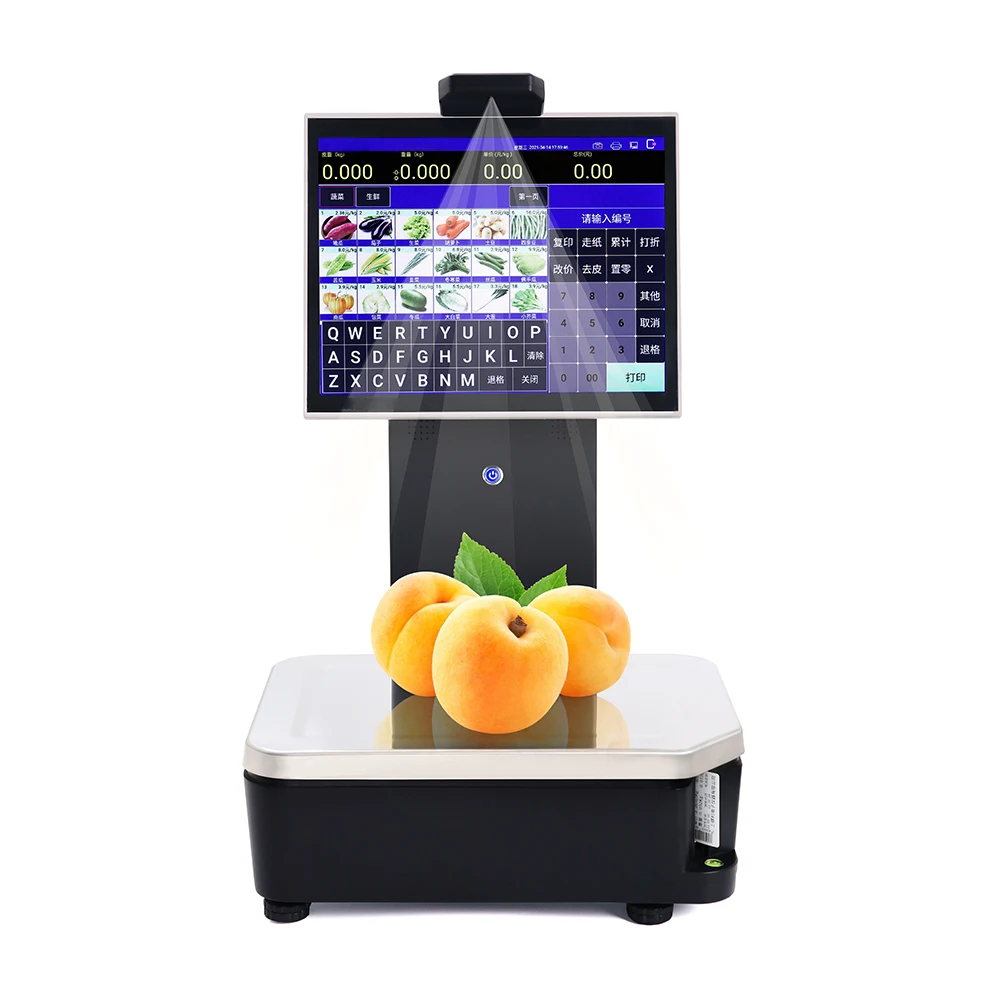
Modern barcode scales combine three critical functions:
This integration enables real-time price calculations—a 500g steak tagged at $9.99/kg automatically prints a $4.99 barcode label. Research shows AI-enhanced scanners now process these labels 40% faster than legacy models, even with damaged or poorly printed codes.
| Era | Innovation | Impact |
|---|---|---|
| 1974 | First UPC-compatible scale | Enabled mass grocery automation |
| 1999 | RFID-barcode hybrid scales | Improved inventory tracking accuracy by 31% |
| 2016 | Cloud-connected scales | Reduced data sync delays from hours to <2 seconds |
| 2023 | AI-powered defect detection | Cut labeling waste by $4.7B annually (Supply Chain Quarterly) |
The shift to 2D barcodes like QR codes (2000s) and eco-friendly biodegradable labels (2020s) further solidified barcode scales as retail infrastructure staples.
Modern barcode scales eliminate manual price lookup by instantly transmitting product weight and pricing data to POS systems. This real-time synchronization reduces average checkout times by 22% in high-volume retail environments (RetailTech Insights 2024). Scales with embedded scanners automatically update inventory counts, ensuring pricing accuracy across physical and digital channels.
APIs act as communication bridges between legacy barcode scales and cloud-based POS platforms. Leading systems use RESTful APIs to standardize data formats for weight measurements, product identifiers, and promotional pricing rules. This standardization reduces integration errors by 64% compared to custom-coded solutions (POS Integration Report 2023).
A regional supermarket chain achieved a 35% reduction in per-transaction processing time after integrating barcode scales with their POS infrastructure. Real-time inventory updates prevented out-of-stock errors during promotions, while automated price verification eliminated 12,000 manual overrides monthly.
Retailers using decade-old POS systems often face data protocol mismatches and hardware compatibility issues. Middleware solutions using EDI (Electronic Data Interchange) translators enable legacy systems to interpret modern barcode scale outputs, with API-driven integrations resolving 89% of synchronization latency problems in field tests.
Barcode scales today cut down on those pesky counting mistakes because they automatically capture weight data with pretty good accuracy around 0.1%. What happens is these systems check the actual weight of products against big central databases where all the item numbers live. When something doesn't match up, the system catches it right away before small problems turn into bigger headaches. A recent look at retail tech from last year showed some interesting results too. Stores that switched to these scales saw their phantom stock issues drop by about 28% when compared to old fashioned manual checks. There are basically three main parts working together behind the scenes to keep everything accurate and running smoothly.
Barcode scale integration enables perpetual inventory accuracy, with 87% of adopters reporting stock record alignment within 1% of physical counts (Intuendi 2024). Real-time synchronization across these systems:
| Metric | Manual Processes | Barcode Scale Systems |
|---|---|---|
| Count Cycle Frequency | Monthly | Continuous |
| Error Detection Lag | 16 days avg. | 43 seconds avg. |
| Discrepancy Resolution | 8.7% | 0.9% |
This granular tracking explains why food retailers using integrated scales reduced expired goods write-offs by $740k annually (Ponemon 2023).
While barcode scales reduce human error, 22% of operations managers report "blind trust" in automation leads to undetected systemic failures. A 2023 supply chain audit found calibration drift in 14% of scales over 18 months, creating $2.1M in cumulative valuation errors across a sample of 120 warehouses. Best practices include:
End-to-end barcode scaling creates an auditable chain of custody, reducing shipment disputes by 40% in multi-location retailers (Brightpath Associates case analysis). Scales automatically log:
This forensic trail helped one apparel retailer identify a $190k shrinkage source in under 48 hours—previously a 3-week investigation.
Barcode scales really boost efficiency when it comes to weighing items for pricing and keeping track of stock levels. Stores that have adopted this tech see checkout times drop by around 22 percent, while their labor expenses go down about 15% over what they'd spend manually handling everything (as per the Retail Automation Study from last year). What's even better is how scanning tech cuts down those frustrating price lookup mistakes. We're talking about a massive 95% reduction in time wasted there, which adds up to something like $8.4 billion saved across the whole industry each year according to numbers from the National Retail Federation. These savings aren't just abstract figures either they represent real money that businesses can reinvest or pass on to customers.
While initial investments range from $2,500—$7,000 per unit, operational savings typically offset costs within 14 months. A 2024 case study of 62 grocery stores showed:
Barcode scales minimize two critical profit leaks:
Over five years, retailers using integrated barcode scale systems achieve 40% lower data correction costs versus manual alternatives. The precision of weight-based scanning eliminates 99.6% of legacy pricing discrepancies, creating audit-ready sales records that reduce compliance risks.
Modern barcode scales form the operational backbone of unified retail ecosystems, enabling synchronized operations across digital and physical channels.
Barcode scales connect warehouse systems to point of sale platforms, giving businesses detailed insight into what stock they have at every sales location. When these systems work together, stores can pick up online orders right from their own shelves if inventory is available there, which means customers get their packages much faster sometimes even half the usual delivery time according to some industry reports. Research shows that when barcodes sync properly between systems, mistakes during order fulfillment drop significantly because the system checks both product weights and where items actually are before processing shipments.
Integrated barcode scales automate price verification at self-checkout kiosks, cross-referencing product weights with database entries to flag discrepancies. This dual-layer validation reduces accidental mis-scans by 27% compared to standalone scanners (Retail Tech Journal 2023).
Progressive retailers leverage barcode data to track product lifecycle stages, from expiration dates in grocery aisles to loyalty program eligibility in apparel stores. This shift transforms barcodes from transactional tools into customer engagement assets.
Emerging systems combine computer vision with barcode scanning to detect mismatched products on scales automatically. Machine learning algorithms analyze historical weight data to predict replenishment needs, optimizing stock levels with 92% forecast accuracy in pilot programs.
Barcode scales increase accuracy in weighing, pricing, and inventory control, reducing human error and operational costs while enhancing checkout efficiency.
They integrate with POS systems to automate data transmission, significantly reducing manual inputs and errors, which shortens checkout duration.
Challenges include data protocol mismatches, hardware compatibility issues, and integration latency, which can be addressed with middleware solutions and API integrations.
Barcode scales provide real-time data synchronization and accurate weight-to-barcode validation, which reduces counting errors and stock discrepancies.
The average payback period is about 14 months, with savings from labor and error reduction often offsetting the initial investment.
 Hot News
2024-09-14
2024-11-18
2023-11-14
2023-04-12
2019-07-11
We specialize in advanced electronic retail solutions to streamline operations and smarten up the shopping experience.